
For executives, C-suite officers, managers, engineering leaders, sales leaders, and equity-compensated California tech employees facing layoffs
By Matthew J. Ruggles
If you are a California tech employee facing a layoff, the severance agreement sitting in your inbox may be far more important than it looks. This is especially true if you are an executive, C-suite officer, senior manager, engineering leader, product leader, finance executive, fintech employee, or sales leader with meaningful unvested RSUs, stock options, bonus compensation, commissions, or incentive pay.
Tech companies rarely describe layoffs in plain English. They call them restructurings, realignments, operating model changes, strategic workforce reductions, or efficiency initiatives. That language may sound polished. It also does not answer the important question: what are you being asked to give up in exchange for the severance payment?
A California tech layoff severance agreement is not a thank-you note. It is a contract. The company is offering money, benefits, or other consideration in exchange for a release of claims, confidentiality, cooperation obligations, non-disparagement language, return-of-property promises, and sometimes restrictions that can follow you into your next role. The agreement may also quietly lock in the forfeiture of unvested RSUs, stock options, bonuses, commissions, and other compensation that may be worth more than the cash severance itself.
At the Ruggles Law Firm, I help California employees evaluate severance agreements, identify leverage, and negotiate improved outcomes before they sign away claims. I have practiced employment law in California for more than 30 years, including many years representing employers before moving to the employee side. That experience matters because severance negotiations are not powered by fairness. They are powered by risk, documentation, timing, and leverage.
This guide is written for California tech employees who cannot afford to treat severance as a formality. If your compensation includes RSUs, options, bonus rights, commission plans, executive equity, severance protections, or anything that depends on continued employment through a vesting or payout date, you should understand the issues before signing. Once the release becomes effective, the company has usually purchased certainty. The question is whether you sold that certainty too cheaply.
Matt’s Legal Perspective
The severance agreement is the company’s opening move, not a stone tablet from Mount HR. Read it carefully before treating it as final.
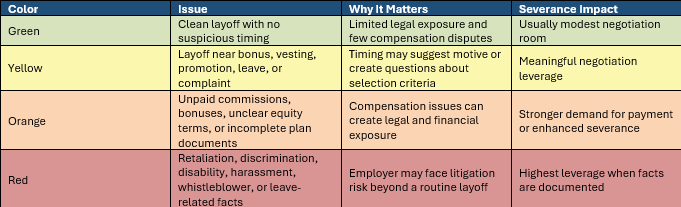
Chart 1: Severance Leverage Map for California Tech Employees
California Tech Layoff Severance Basics
The first rule is simple: do not sign before you understand the leverage. A severance offer may feel like a deadline-driven administrative task, but it is often the most important employment document you will sign after the offer letter. The company drafted it for the company’s benefit. That is not immoral; it is just the nature of employer-drafted agreements.
Your leverage depends on what the company is trying to avoid. In a clean layoff with no legal issues, no unpaid compensation, no suspicious timing, and no equity problem, leverage may be limited. But in a messy layoff, leverage can grow quickly. A termination shortly before an RSU vesting date, shortly before a bonus payout, shortly after a protected complaint, or shortly after medical leave is not automatically unlawful. It is, however, worth reviewing carefully.
The most common mistake tech employees make is evaluating severance only by counting weeks of salary. That may work for a simple hourly job without equity, bonus rights, commissions, or claims. It is a bad approach for executives and managers whose true compensation package includes equity and incentive pay. For those employees, severance must be evaluated as a total economic exit package.
A serious review should ask: What legal claims are being released? What compensation is being forfeited? What vesting dates are being missed? What bonuses or commissions may already have been earned? What restrictions will apply after separation? What message will the company provide to future employers, investors, customers, or colleagues?
For more information, read my previous blog: When Do You Have Legal Leverage to Negotiate a Bigger Severance Package in California?
Matt’s Legal Perspective
A severance offer is not a participation trophy. It is the company buying peace. The price depends on how much peace it needs.
Why Executives and Managers Need a Different Severance Review
Executives, C-suite officers, vice presidents, directors, and senior managers need a different severance analysis than most employees because the documents, compensation structure, reputational issues, and future restrictions are more complicated. A rank-and-file employee may need to focus on salary continuation and health benefits. An executive may need to analyze equity acceleration, pro rata bonus rights, indemnification, D&O coverage, cooperation duties, public messaging, non-disparagement terms, customer transition obligations, and board-level approval.
The stakes also tend to be higher. An executive may have unvested RSUs worth several hundred thousand dollars or more. A revenue leader may have commissions or bonus compensation tied to deals already closed. A general counsel, CFO, product leader, engineering leader, or security executive may have raised compliance concerns before being included in a layoff. Each of those facts changes the negotiation.
Executive severance should not be reviewed as a simple extension of payroll. It should be reviewed as a business exit, legal settlement, compensation reconciliation, and reputation-management document. The goal is not merely to obtain more money. The goal is to preserve the next opportunity while ensuring the company pays appropriate value for the release it wants.
For more information, read my previous blog: Severance Agreement Negotiation: A Tech Industry Case Study
Matt’s Legal Perspective
Executive severance is not just about getting paid to leave. It is about making sure the exit does not quietly poison the next opportunity.
RSUs After Layoff in California
Restricted stock units are often the center of the severance analysis for California tech employees. In many equity plans, unvested RSUs are forfeited when employment ends. That is usually the company’s first answer. It may also be the company’s favorite answer. But it should not always be the end of the discussion.
The better questions are more precise. Did the company terminate employment shortly before a scheduled vesting date? Did the company make representations about continued employment through a vesting event? Were employees with large upcoming vesting events selected while others were retained? Did the company manipulate performance narratives to justify a layoff? Did the company fail to provide the equity documents necessary to understand the forfeiture? Did the company demand a release of claims connected to equity while offering severance that ignores the value of that equity?
For executives, managers, and high-value individual contributors, the value of a missed RSU vest can dwarf the cash severance. That is why the first step is always document preservation. Download the equity plan, grant agreements, vesting schedule, offer letter, compensation statements, amendment documents, termination materials, and any portal screenshots showing vesting dates and share quantities. Do not assume access will remain available after termination.
The legal theory is not always that unvested RSUs are wages. Often, the stronger leverage comes from timing, contract language, implied covenant issues, wrongful termination theories, unequal treatment, misrepresentation, or suspicious selection criteria. The equity plan may say forfeiture. The facts may still create negotiation leverage.
For more information, read my previous blog: Laid Off With RSUs in California: When Lost Equity Creates Severance Leverage
Matt’s Legal Perspective
Unvested RSUs are often “gone” under the plan documents. But “gone” is not the same as “irrelevant.” If the company created the termination to make the equity disappear, the story changes.
RSU Acceleration and Lost Vesting Events
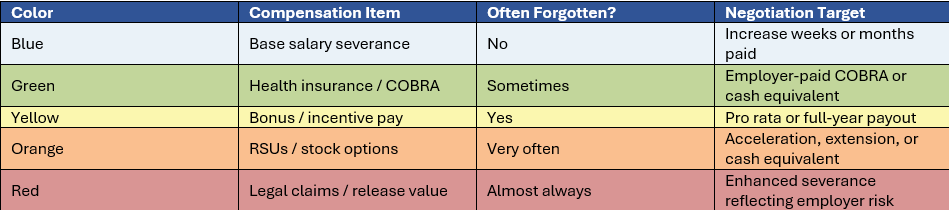
For equity-heavy tech employees, RSU acceleration may be the most valuable severance term. Additional weeks of salary are useful, but acceleration of the next vesting tranche may be worth far more. In some cases, the best severance demand is not simply “more severance.” It is “treat the next vesting event fairly.”
RSU acceleration can take many forms. The company may accelerate the next scheduled tranche, accelerate vesting through the severance period, provide a cash equivalent, extend employment through the vesting date, create a consulting arrangement to preserve vesting, approve special equity treatment, or classify the termination as one triggering benefits under an executive severance or change-in-control plan.
The cleanest request is often acceleration through the next vesting date or through the severance period. If the company offers three months of salary continuation but cuts off equity immediately, ask why the severance period recognizes transition for salary but ignores equity vesting during the same period. That may not win the issue by itself, but it frames the negotiation in a way decision-makers can understand.
A strong RSU acceleration demand should identify the number of shares at stake, the vesting dates, the current or recent stock value, the value of the missed tranche, the amount vesting during the severance period, and any facts suggesting that the termination date was chosen to avoid vesting.
For more information, read my previous blog: How to Negotiate RSU Acceleration in California Severance Agreements
Matt’s Legal Perspective
In tech severance, salary is often the appetizer. Equity is dinner. Do not negotiate like you are still looking at the appetizer menu.
Chart 2: Tech Severance Value Stack
Bonuses, Commissions, Windfall Provisions, and Incentive Pay
Many technology employees are paid through compensation systems that are more complex than base salary. This is especially true for enterprise sales executives, chief revenue officers, business development leaders, partnership executives, finance and fintech employees, customer success leaders, and executives with annual performance bonuses.
The key distinction is whether compensation was already earned before termination. Severance is consideration for a release. Earned compensation is money the company already owes. Employers often blur that distinction because blurred distinctions can be financially convenient when someone else’s compensation is involved.
Common disputes include closed deals not paid before termination, bonus eligibility cut off shortly before payout, commission plans changed after a large deal, quota adjustments after performance, management discretion used to avoid payment, windfall provisions used to reduce compensation, commission chargebacks after separation, and severance agreements that attempt to release unpaid compensation claims.
For executives and sales leaders, the documents matter. Review the written compensation plan, bonus plan, commission plan, quota documents, CRM records, emails confirming attainment, board or management approvals, payout statements, and any changes made after performance occurred. A company may have discretion in some circumstances, but discretion is not a magic wand that turns earned compensation into optional generosity.
Matt’s Legal Perspective
If you earned the compensation, the company does not get to rename it “severance” and act generous. Paying what is already owed is not a bouquet of roses.
WARN Act Issues in Tech Layoffs
Large tech layoffs may raise WARN Act issues. California WARN can require covered employers to provide advance written notice before certain mass layoffs, relocations, or closures. WARN issues can become complicated in technology companies because employees may be remote, distributed across multiple locations, assigned to different entities, or affected in staged waves.
Employees should ask whether the layoff was part of a larger reduction, how many California employees were affected, whether written WARN notice was provided, whether pay in lieu of notice was offered, whether the company staged layoffs to avoid notice obligations, and whether the separation agreement attempts to release WARN-related claims.
WARN is not the only issue in most tech severance negotiations, but it can create additional leverage. A company that mishandled notice requirements may have more reason to resolve claims promptly and quietly.
Matt’s Legal Perspective
When a company lays people off first and checks the notice rules later, that is not strategy. That is a calendar problem wearing a headset.
Retaliation, Disability, Leave, Age, and Wrongful Termination Signals
A layoff is not unlawful simply because it is painful or unfair. But the label “layoff” does not immunize an employer from liability. If the selection decision was influenced by protected activity, protected status, medical leave, disability accommodation issues, age, pregnancy, whistleblowing, complaints about unpaid wages, or refusal to participate in unlawful conduct, the severance analysis changes.
Executives and managers should pay particular attention to timing. A layoff that follows a protected complaint, medical leave, accommodation request, whistleblower report, compensation dispute, refusal to approve improper conduct, or objection to discriminatory practices deserves careful review. Timing alone does not prove the case. It may, however, be the thread that leads to the rest of the sweater.
The best leverage comes from facts, not adjectives. Save performance reviews, manager messages, org charts, selection criteria, retained comparator information, complaint emails, leave communications, accommodation records, and documents showing who knew what and when. A calm, fact-based presentation usually has more impact than an emotional accusation.
For more information, read my previous blog: When Do You Have Legal Leverage to Negotiate a Bigger Severance Package in California?
Matt’s Legal Perspective
“I was treated unfairly” may be true. “I was selected for layoff two weeks after reporting unlawful conduct” is leverage. Facts beat adjectives.
Release Language, Non-Disparagement, Confidentiality, and Future Restrictions
The release is the centerpiece of the severance agreement. It usually asks the employee to waive all known and unknown claims against the company, affiliates, officers, directors, shareholders, investors, board members, successors, assigns, and other related parties. The broader the release, the more carefully the consideration should be evaluated.
California employees should review the Civil Code section 1542 waiver, confidentiality language, non-disparagement clause, cooperation obligations, return-of-property requirements, trade-secret provisions, invention-assignment language, arbitration provisions, choice-of-law clauses, forum-selection language, no-rehire provisions, non-solicitation language, tax provisions, indemnification carveouts, bonus and commission carveouts, and equity treatment.
California generally disfavors non-compete restrictions, and California employees should be careful with language that attempts to limit future employment, client relationships, customer communications, or competitive work. For executives, vague cooperation duties can also become expensive and disruptive if they require future assistance without compensation, time limits, or reasonable boundaries.
A severance agreement should also preserve rights that should not be waived. That may include unemployment benefits, vested benefits, workers’ compensation rights, rights that cannot legally be released, indemnification rights, D&O insurance, and earned compensation claims unless they are actually being resolved.
For more information, read my previous blog: California Severance Agreement: Why You Must Act Fast and Hire a Lawyer
Matt’s Legal Perspective
The release is where the company asks you to give away the lawsuit you may not yet know you have. Read it like someone hid money in the footnotes.
Chart 3: Severance Agreement Review Priorities
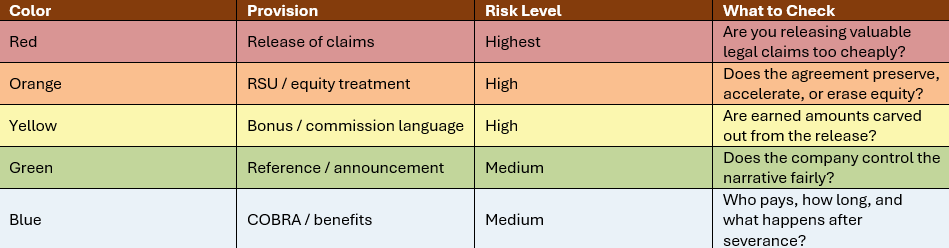
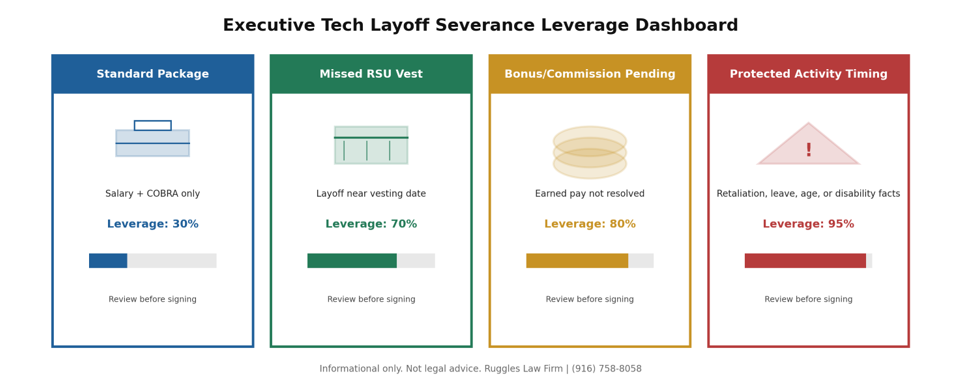
Chart 4: Executive Tech Layoff Severance Leverage Dashboard
Matt’s Legal Perspective
A severance agreement is easier to evaluate once you stop asking, “Is this fair?” and start asking, “What risk is the company trying to buy?” Fairness is lovely. Risk is what gets budget approval.
Executive and C-Suite Severance Issues
For C-suite officers and senior executives, the severance review should preserve both immediate compensation and future-facing protections. That means reviewing equity, bonus, indemnification, D&O insurance, cooperation duties, references, public statements, non-disparagement language, and any restriction that could interfere with the next role.
Cause definitions, good-reason resignation language, change-in-control triggers, double-trigger vesting, deferred compensation, clawbacks, public-company disclosure, board approvals, garden-leave concepts, consulting arrangements, advisory roles, customer transition duties, and tax treatment may all matter. A standard severance template rarely handles these issues well.
Executives should also consider reputation. What will the company say internally? What will it say externally? Will the company provide a neutral reference? Will there be an agreed announcement? Will the executive be restricted from explaining the departure? The exit narrative can matter almost as much as the check, especially for leaders moving to another high-visibility role.
Matt’s Legal Perspective
For executives, a severance agreement should not become a professionally wrapped bear trap. It should resolve the exit without quietly damaging the next one.
Case Studies
Case Study 1: The VP of Engineering Terminated Two Weeks Before Vesting
A VP of Engineering is laid off two weeks before a major RSU vesting date. The company says the layoff was part of a cost reduction. The VP had excellent performance reviews and was leading a critical product team.
The analysis should focus on timing, selection criteria, similarly situated leaders, communications about cost savings, equity expense, and whether the termination date was chosen or accelerated to avoid vesting. The negotiation target may include acceleration of the next vesting tranche, extension of employment through the vesting date, or a cash equivalent.
Matt’s Legal Perspective
When a company discovers “cost savings” right before a large vest, the timing may not prove the case, but it deserves a very bright flashlight.
Case Study 2: The Chief Revenue Officer With a Large Unpaid Bonus
A CRO is terminated after closing a record year. The bonus plan gives the company discretion, but executives repeatedly confirmed that revenue targets were met. The company then offers severance while refusing bonus payment.
The negotiation should separate earned compensation from severance consideration. The demand should cite the plan, attainment records, written approvals, historical payout practices, and any evidence that discretion was applied only after the company disliked the size of the payout.
Matt’s Legal Perspective
Employer discretion is not a magic wand. It does not turn earned compensation into corporate confetti.
Case Study 3: The Senior Product Manager Selected After Medical Leave
A senior product manager takes medical leave and returns to work. Within a month, the employee is included in a layoff despite strong reviews. The company says the decision was based on business needs.
The analysis should identify who selected the employee, whether decision-makers knew about the leave, whether similarly situated employees were retained, whether accommodation issues were pending, and whether the company’s explanation matches the documents.
Matt’s Legal Perspective
A layoff label does not disinfect a bad motive. Sometimes “restructuring” is just a nicer font.
Case Study 4: The Sales Executive With a Windfall Commission Problem
An enterprise sales executive closes a major deal. The company invokes a windfall provision to reduce the commission, then includes the employee in a layoff and offers severance.
The negotiation should preserve unpaid commission claims, challenge vague discretionary reduction language, analyze when the commission was earned, and use the compensation dispute as leverage before any release is signed.
Matt’s Legal Perspective
A commission is only a windfall when the company dislikes the number. Funny how that definition never seems to work in the employee’s favor.
Key Takeaways for California Tech Employees Facing Layoff
- Do not evaluate the offer based only on salary continuation. The real value may be in RSUs, stock options, bonuses, commissions, acceleration, or legal claims.
- Do not assume unvested RSUs are irrelevant. Even if the plan says they are forfeited, the timing and circumstances of the layoff may create negotiation leverage.
- Do not release unpaid compensation claims casually. Earned commissions, bonuses, and incentive compensation should be analyzed separately from severance.
- Do not ignore suspicious timing. Layoffs following protected complaints, medical leave, accommodation requests, whistleblowing, or compensation disputes may create stronger claims.
- Do not sign before reviewing the release. Once the release becomes effective, most leverage is gone.
- Do not let the company define the entire negotiation. “Standard package” is often a phrase, not a law.
Matt’s Legal Perspective
The severance deadline is designed to make you move quickly. Your job is to move carefully. Those are not the same thing, despite what the email from HR would like you to believe.
Before You Sign a Tech Layoff Severance Agreement, Know What You Are Selling
The severance agreement is not just a payment document. It is a release of legal claims, a compensation settlement, an equity cutoff, a confidentiality agreement, and sometimes a future-employment restriction wrapped into one document.
If you are a California tech employee, executive, manager, VP, founder-level employee, or C-suite officer with significant RSUs, stock options, bonus compensation, commissions, or severance concerns, review the agreement before signing.
The company already knows what it wants from the severance agreement. You should know what you are giving up. Contact the Ruggles Law Firm at (916) 758-8058 for a severance agreement review before you sign.
75 FAQs About Tech Layoffs, Severance, RSUs, and Executive Compensation in California
These answers provide general information, not individualized legal advice.
RLF Blog Post Disclaimer
Updated 07-06-2026
Contact the Ruggles Law Firm at 916-758-8058 to Evaluate Your Potential Lawsuit
Matt Ruggles has a thorough understanding of California employment laws and decades of practical experience litigating employment law claims in California state and federal courts. Using all of his knowledge and experience, Matt and his team can quickly evaluate your potential claim and give you realistic advice on what you can expect if you sue your former employer.
Contact the Ruggles Law Firm at 916-758-8058 for an initial case consultation.
Blog posts are not legal advice and are for information purposes only. Contact the Ruggles Law Firm for consideration of your individual circumstances.