
Workplace Discrimination Lawyer in Sacramento
Helping California Employees Address Workplace Discrimination
Facing unequal pay, a denied promotion, or termination because of a protected characteristic? Ruggles Law Firm helps Sacramento and California employees assess workplace discrimination, evidence, and potential claims.
Matthew J. Ruggles
30+ Years of Employment Litigation Experience
Workplace Discrimination Claims in California
A denied promotion, lower pay, discipline, or a firing can raise difficult questions about how you were treated and why. Ruggles Law Firm evaluates the employment decision, the employer’s explanation, and the evidence connecting that decision to a protected characteristic.
Bring a short timeline and the documents you already have. We can help identify which legal protections may apply, what information is missing, and the deadlines that require attention.
Understand Your Options Before Taking the Next Step
Understanding Workplace Discrimination
Employment discrimination can occur when an employer makes a hiring, pay, promotion, assignment, discipline, or termination decision because of a legally protected characteristic. A disagreement or unfair outcome alone does not establish discrimination. The reason for the decision and its effect on your employment matter.

Policies That Disproportionately Affect a Protected Group
A policy that appears neutral may unlawfully disadvantage a protected group. This is called disparate impact. It requires evidence connecting a particular practice to the disparity and consideration of the employer’s legal defenses and available alternatives. A statistical difference alone does not resolve the claim.
Unequal Treatment in Employment Decisions
Disparate treatment concerns a decision made because of a protected characteristic. An explicit discriminatory statement can be important, but it is not required in every case. A pattern of decisions, inconsistent explanations, or different treatment of comparable employees may also be relevant.
A useful assessment asks:
- Which protected characteristic is involved?
- What employment decision or change occurred?
- What facts connect the decision to that characteristic?
- What reason did the employer give, and do the records support it?
Employment decisions to examine include:
- Refusal to hire or promote.
- Unequal compensation or access to training.
- Demotion, discipline, or materially worse assignments.
- Termination or discriminatory selection for layoff.
Harassment, retaliation, and failure to accommodate have related but distinct legal requirements. You do not have to be fired to seek advice.
California and Federal Employment Protections
Several laws may apply to the same facts. Coverage depends on the employer, the employment relationship, and the particular claim. The following is a starting point, not a substitute for reviewing your situation.
Whistleblower Retaliation
Labor Code section 1102.5 protects qualifying disclosures of suspected legal violations and certain refusals to participate in unlawful conduct. This is a retaliation protection rather than a protected-characteristic discrimination claim. Tell counsel what you reported, to whom, and when.
Pregnancy Disability and Leave
California pregnancy disability leave generally applies to employers with five or more employees and can provide up to four months of leave when medically needed for pregnancy, childbirth, or a related condition. Pregnancy discrimination, accommodation, and bonding leave involve additional or distinct requirements.
Federal Age Discrimination Protection
The Age Discrimination in Employment Act protects people age 40 and older. Its private-employer coverage generally begins at 20 employees, subject to statutory counting rules. California FEHA generally reaches smaller employers. Federal and California age claims do not use identical legal standards.

California Fair Employment and Housing Act
FEHA is California’s principal workplace discrimination law. Its discrimination protections generally apply to employers with five or more employees. Harassment protections extend to smaller workplaces as well. Coverage exceptions and the worker’s relationship to the business require review.
Agency requirements: A private FEHA lawsuit generally requires a complaint with the California Civil Rights Department (CRD) and a right-to-sue notice. Agency and court deadlines are separate. Do not wait for an internal investigation to finish before checking them.
Title VII of the Civil Rights Act
Title VII prohibits specified discrimination because of race, color, religion, sex, or national origin. For private employers, coverage generally requires at least 15 employees for the required number of weeks. An EEOC charge is generally required before a Title VII lawsuit; a CRD notice alone does not establish that federal requirements have been met.

Disability Discrimination and Accommodation
The federal Americans with Disabilities Act generally covers private employers with at least 15 employees, subject to statutory counting rules. California FEHA generally applies at five. Disability discrimination, reasonable accommodation, and the interactive process each require their own analysis. Read more about disability discrimination and accommodation.
What a FEHA Discrimination Claim Requires
Start With the Decision and the Evidence
A focused review distinguishes the protected characteristic, the employment action, and the connection between them. The employer’s explanation and contrary evidence also deserve careful attention.
Protected Characteristics
California protections include race, color, ancestry, national origin, religion, age 40 and older, disability, medical condition, genetic information, marital status, sex, gender, sexual orientation, gender identity or expression, military or veteran status, and reproductive health decision-making. Perceived characteristics and association can also be protected.
An Adverse Employment Action
A firing is one example. Denial of a promotion, discriminatory pay, or another action materially affecting employment may also qualify. Explain what changed, when it changed, and how it affected your work. The legal standard depends on the claim.
A Connection to the Protected Characteristic
Relevant evidence may include remarks, the sequence of events, decision-maker knowledge, inconsistent explanations, and treatment of comparable employees. Timing can matter, but it does not automatically prove discriminatory motive.
The Role of Discriminatory Motivation
For a FEHA disparate-treatment claim, the protected characteristic must be a substantial motivating reason for the challenged decision. It need not be the only reason. Mixed-motive issues and an employer’s same-decision defense can affect the available remedies. An individual assessment should address those issues rather than promise an outcome.
Steps to Take if You Suspect Discrimination
Preserve a Clear Record
Write a dated timeline. Keep relevant reviews, pay records, job postings, messages, complaints, and the employer’s stated explanation that you lawfully possess. Identify witnesses and distinguish what you observed from what someone else told you. Do not access restricted systems or take confidential records you are not entitled to obtain.
Our guide to employee training and personnel records explains how records may help assess a performance-based explanation.
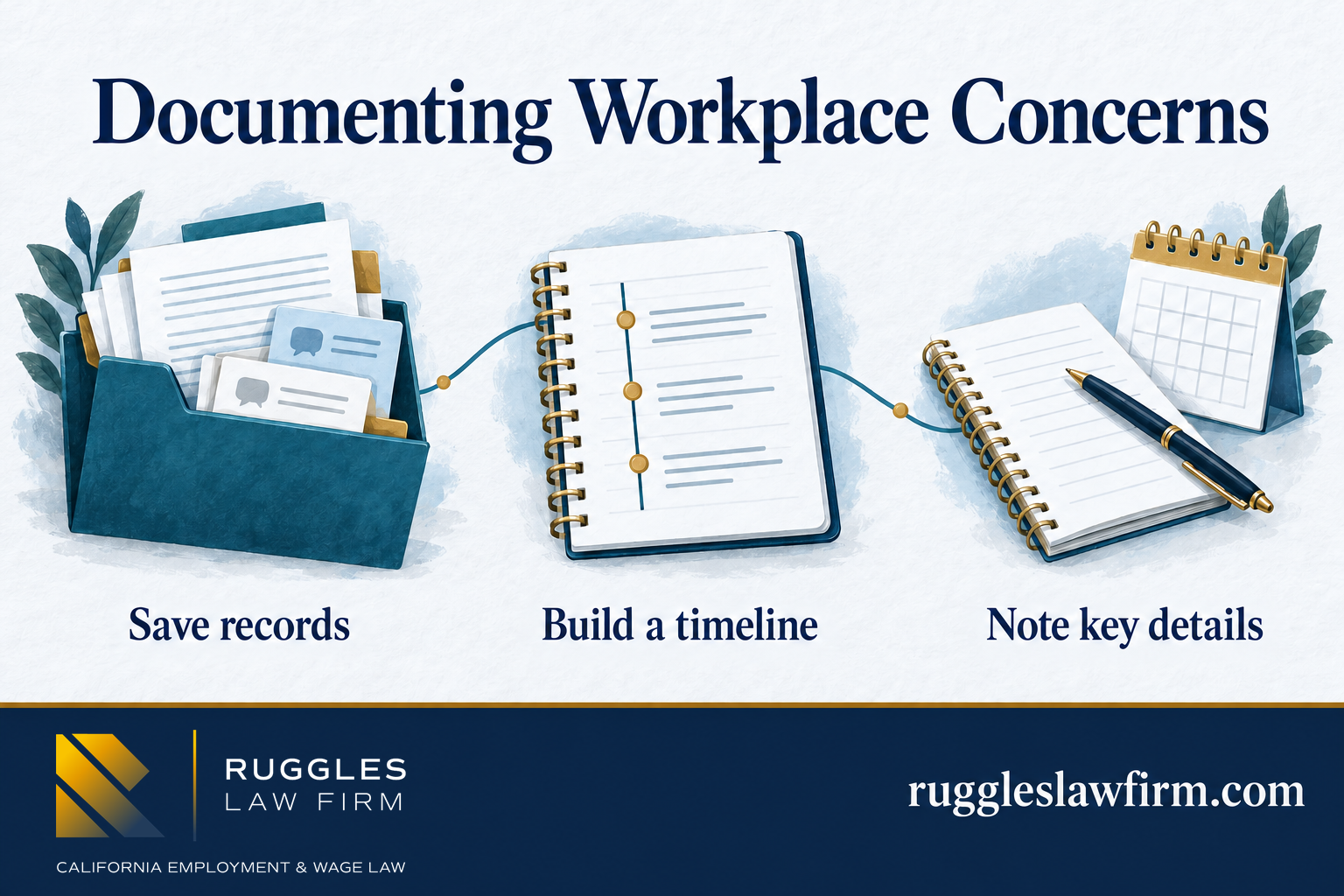
Describe the Concern Clearly
Review the employer’s reporting procedure and consider documenting the specific conduct, dates, people involved, and why you believe it relates to a protected characteristic. Keep a copy of your report and response. Whether or how to report can depend on safety, the circumstances, and the claim; obtain advice when needed.
Get Advice Before Making Major Decisions
Before resigning, signing a release, or accepting a severance offer, understand the consequences for your options. Bring any proposed agreement and its response deadline to the consultation.
Consider Resolution Options
Depending on the facts, options may include an internal response, agency proceedings, negotiation, mediation, or litigation. Settlement discussions do not automatically pause filing deadlines.
Recognize Possible Retaliation
If treatment changes after you raise a discrimination concern or participate in an investigation, record what changed and who knew about your report. Retaliation is a separate analysis. See our discussion of protected activity in California retaliation cases.
Check Agency and Court Deadlines Promptly
FEHA complaints generally must be filed with CRD within three years of the alleged unlawful act. A private FEHA lawsuit generally must follow within one year of the right-to-sue notice. An EEOC charge is often required within 300 days in California, while federal employees generally must contact an EEO counselor within 45 days. Exceptions, different claims, and particular events can change these rules.
Do not assume an internal complaint or negotiation extends time. Review CRD’s right-to-sue guidance and EEOC filing deadlines with counsel.
Protected Characteristics and Common Concerns
These examples illustrate issues to investigate, not automatic findings of liability. More than one protected characteristic may be involved, and the full context matters.
Race, Color, Ancestry, and National Origin
A hiring, promotion, pay, or discipline decision based on race, skin color, ancestry, or national origin may violate the law. Statements, selection criteria, and treatment of comparable employees may help explain the decision.
National Origin and Language Policies
Accent or language requirements can raise questions when they are unrelated to the work or applied discriminatorily. The actual job duties, business explanation, and effect of the policy require review.
Religion
Religious discrimination and accommodation questions may involve scheduling, dress, grooming, or religious observance. The applicable accommodation and hardship standards depend on the governing law.
Sex and Gender
Discriminatory hiring, pay, assignments, or promotion decisions can implicate sex or gender protections. Equal-pay claims have separate requirements and may be available alongside discrimination claims.
Sexual Orientation, Gender Identity, and Gender Expression
FEHA protects employees and applicants against discrimination based on sexual orientation, gender identity, or gender expression. A decision based on a perceived characteristic can also raise a claim.
Age 40 and Older
Age-based assumptions about ability, adaptability, or retirement can be relevant when tied to an employment decision. Being older than a selected employee does not by itself establish unlawful discrimination.
Disability and Medical Condition
Discrimination and failure to accommodate are distinct claims. Explain the limitations, requested changes, employer response, and relevant medical documentation. An employer may have duties even when no termination occurred.
Pregnancy and Reproductive Health Decisions
FEHA protects against discrimination involving pregnancy, childbirth, breastfeeding, related conditions, and reproductive health decision-making. Leave and accommodation rights may also apply.
Other Protected Characteristics
Genetic information, marital status, and military or veteran status are also protected under FEHA. Tell counsel about perceived characteristics or association with another person when relevant to the decision.
Evidence That Can Help Explain the Decision
Evidence can support or challenge an account of discrimination. Compare the employer’s explanation with records from before the dispute, the selection process, and how comparable situations were handled. No single document is required in every case.

Direct Evidence
A decision-maker’s statement linking a decision to a protected characteristic can be important. Record the words as accurately as possible, who heard them, and the context. Do not alter a message or fill gaps in your recollection.
Circumstantial Evidence
Changes in explanations, departures from normal procedures, patterns of decisions, or materially different treatment may support an inference. Comparisons should account for relevant differences in roles, conduct, qualifications, and decision-makers. An employer may have a lawful explanation that also needs investigation.
Questions That May Complicate a Claim
An objective assessment considers unfavorable facts as well as supporting evidence. These issues call for closer review; they are not automatic reasons to dismiss a concern.
Unfairness Without a Protected Connection
Poor management or unfair treatment alone may not establish discrimination. Identify what connects the employment action to a protected characteristic or another legal protection.
Workplace Conflict
A personality conflict may have a lawful explanation, but a label such as “not a good fit” can also conceal bias. Review the underlying events rather than relying on the label.
Documented Business Reasons
Performance, qualifications, and business needs may explain a decision. Compare those reasons with the contemporaneous record and how the employer handled similar situations.
Subjective Evaluations
A subjective review is not automatically discriminatory. Changing criteria, unsupported criticism, or inconsistent application may nevertheless be relevant when connected to a protected characteristic.
Limited Documents or Comparators
Lack of a written admission or an identical coworker does not necessarily end the inquiry. Witnesses, chronology, records, and other evidence may support or undermine the claim.
More Than One Explanation
A decision can involve several motives. The applicable causation standard and any defenses require careful analysis; a plausible business explanation does not automatically resolve every claim.
Discuss Your Concerns and Deadlines With Counsel
Facts That May Support Your Claim
The Protected Characteristic
Identify the actual or perceived characteristic or association at issue. Retaliation for protected conduct is a distinct claim and does not require proving the underlying discrimination.
The Employment Decision
Explain what changed in hiring, pay, promotion, assignments, discipline, or employment status. Length of service alone does not establish the strength of a claim.
The Connection to the Decision
Look for relevant statements, timing, decision-maker knowledge, patterns, and treatment of comparable employees. Consider competing explanations.
The Employer’s Explanation
Compare the stated reason with records and practices from before the dispute. A shifting explanation may matter, but an explicit admission is not required in every case.
Documents and Witnesses
Preserve records you lawfully possess and identify witnesses. Describe missing documents without guessing what they contain.
Agency Requirements
A private FEHA lawsuit generally requires a CRD complaint and right-to-sue notice. Federal claims can require separate EEOC steps. Confirm the requirements for each claim.
Filing Deadlines
A FEHA complaint generally must be filed with CRD within three years of the unlawful act, followed by a lawsuit generally within one year of the right-to-sue notice. An EEOC charge is often due within 300 days in California. Different claims and exceptions can change deadlines; do not rely on a blanket two-year rule.
Issues That Need Further Investigation
Incomplete or Conflicting Evidence
Missing documents or an unfavorable witness do not automatically decide a case. An assessment should identify what is known, disputed, and still obtainable.
A Lawful Explanation
Reliable evidence of a nondiscriminatory reason may complicate a claim. Evaluate it alongside any evidence of bias, inconsistent treatment, or mixed motives.
No Material Employment Change
A discrimination claim may require a materially adverse employment action. Harassment, retaliation, or accommodation claims may raise different issues even without a firing.

Examples of Issues Worth Reviewing
The following are hypothetical situations, not firm results or predictions. Each requires evidence and an assessment of the employer’s response.
A Promotion Decision
An employee with strong reviews is passed over after a decision-maker makes comments about her gender. Compare qualifications, selection criteria, timing, and the employer’s explanation.
Disability and Return to Work
An employee is told to remain on unpaid leave despite identifying work they believe they can perform with accommodation. Review the job’s essential functions, restrictions, available accommodations, and the interactive process.
Discipline and Race
Two employees appear to receive different discipline for similar conduct. Review their roles, conduct, histories, decision-makers, and any evidence linking the difference to race.
Pregnancy and Assignments
An employee loses important assignments after announcing a pregnancy. Determine what changed, whether the employer relied on stereotypes, and whether another supported explanation exists.
A Complaint Followed by Discipline
After reporting religious discrimination, an employee receives an unexpected warning. Examine the report, decision-maker knowledge, chronology, and stated reason as part of a separate retaliation analysis.
For a closer look at employer explanations, read our article about being fired for a false reason. An inaccurate explanation can matter, but the connection to a protected right remains essential.
Common Workplace Discrimination Questions
Is unfair workplace treatment always unlawful discrimination?
Poor management or unfair treatment alone may not establish discrimination. Identify what connects the employment action to a protected characteristic or another legal protection.
What employment decisions can involve discrimination?
Discrimination concerns can involve hiring, pay, promotions, assignments, discipline, or termination. Identify the decision and what connects it to a protected characteristic.
Do I need a written admission from my employer?
Lack of a written admission or an identical coworker does not necessarily end the inquiry. Witnesses, chronology, records, and other evidence may support or undermine the claim.
What records and witness information should I preserve?
Preserve records you lawfully possess and identify witnesses. Describe missing documents without guessing what they contain.
Related Reading for California Employees
These focused guides address common questions that arise when evaluating discrimination concerns:
- employee training and personnel records — understanding a performance or training explanation.
- protected activity in California retaliation cases — when a complaint or participation is protected.
- being fired for a false reason — testing the employer’s stated reason.

California Severance Negotiation Lawyer: How We Increased a Two-Week Offer to Six Months of Pay
If you’ve just been handed a lowball severance offer and you’re wondering whether there’s any realistic way to increase it, you’re not imagining the problem. Employers don’t hand out more severance...

Can I Challenge an Arbitration Agreement in California After I’ve Signed It?
Many California employees wonder whether they can challenge an arbitration agreement in California after they’ve signed it. Employers often require workers to sign these agreements when they start a...

Proactive Severance Negotiation in California: 13 Mistakes to Avoid
Most executives sense their role is unstable long before termination, but most wait too long to act. Executives convince themselves that the reorganization will settle or that loyalty will be...
Potential Remedies and Financial Losses
Available remedies depend on the law, the facts proved, and applicable limits. They may include lost earnings, emotional distress damages, appropriate workplace relief, and in qualifying cases attorney’s fees or punitive damages. No category is automatic.
Lost Earnings and Benefits
Pay records, compensation terms, benefits, replacement earnings, and efforts to find comparable work help establish financial loss. A calculation should reflect the evidence and the legal claim, not a fixed estimate based on age or time away from work.
Past and Future Earnings
Supported back pay and, where appropriate, front pay may be available. The period, ability to work, replacement income, and mitigation evidence require individual review.
Benefits and Variable Compensation
Identify lost insurance benefits, retirement contributions, commissions, bonuses, or equity at issue. Plan terms and evidence determine whether and how these losses may be recoverable.
Job Search and Replacement Earnings
Keep accurate records of applications, interviews, offers, and later earnings. The employer may dispute causation or argue that reasonable efforts would have reduced the claimed loss.
Emotional Distress
Supported emotional distress damages may be recoverable. The evidence must address the harm and its connection to the unlawful conduct; there is no guaranteed value based on a diagnostic label or duration alone.
Describe the Actual Impact
Explain changes in daily life, sleep, relationships, and well-being, including when they occurred. Specific and accurate facts are more useful than a damages label.
Supporting Evidence
Testimony and, where relevant, treatment records may support emotional distress claims. Discuss the scope and privacy implications of sensitive information with counsel.
Other Available Relief
Depending on the claim and circumstances, relief may also involve hiring, reinstatement, promotion, accommodation, or changes to workplace practices.
Attorney’s Fees and Costs
Some discrimination statutes permit recovery of reasonable attorney’s fees and costs when their requirements are met. The governing law, outcome, and fee agreement matter.
Punitive Damages
Punitive damages require heightened proof and applicable employer responsibility. They are not available against every defendant or automatically awarded when discrimination is established.
Schedule Your initial case consultation
Prepare for Your Initial Case Consultation
Bring a timeline, relevant records, the employer’s explanation, and any agency notice or severance offer. Flag every pending deadline so the next steps can be assessed promptly.
The Ruggles Law Firm Serves Many Cities in Northern California and Beyond
At the Ruggles Law Firm, we proudly extend our employment law services to all regions across California. If you believe you have faced injustice at the hands of your employer or have experienced discrimination in the workplace, we are dedicated to assisting you in seeking justice. Reach out to us today and allow Matt Ruggles to provide you with an initial consultation of your potential claim.
Sacramento
- Roseville
- Folsom
- Yuba City
- Marysville
- Davis
- Stockton
- Modesto
- Fresno
- And more!
San Francisco
- Walnut Creek
- Berkeley
- Oakland
- Concord
- Burlingame
- San Raphael
- And more!
San Jose
- Palo Alto
- Sunnyvale
- Redwood City
- Cupertino
- San Mateo
- Santa Clara
- Mountain View
- And more!